
Why the Polish League Still Underperforms
Ekstraklasa has scale, demand and history — but no coherent operating model.


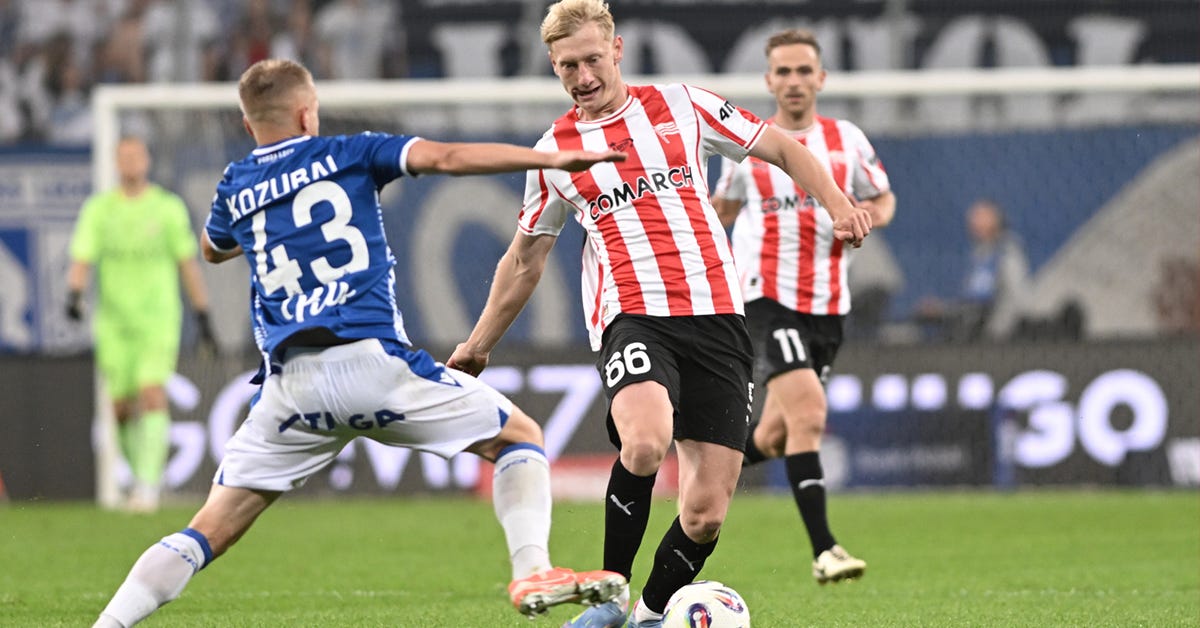
Poland is not a niche market. The country’s population is in the high-30-millions, with the World Bank estimating 36.4m for 2025 after a long demographic decline. The Ekstraklasa is also riding a real domestic wave: UEFA’s wider attendance work on the 2023–24 season flagged Poland as one of Europe’s biggest risers, with reporting citing +26% growth.
Commercially, the league has moved into a different bracket for Central and Eastern Europe. Canal+’s extension with the Ekstraklasa covering 2023–24 to 2026–27 has been reported at nearly PLN 1.3bn, or roughly PLN 325m per season.And the stadium base is not a limiting factor in the way it is in many emerging leagues. Wrocław’s Euro 2012 ground, for example, is a UEFA Category 4 venue, owned by the City of Wrocław, with a capacity of 42,771.
So why does the Ekstraklasa still feel like a top-20 league? Because it has inputs, but it has not yet built the institutional consistency that turns scale into repeatable European performance and premium player pricing.
The money is improving, but the league still sells like a “developing” market
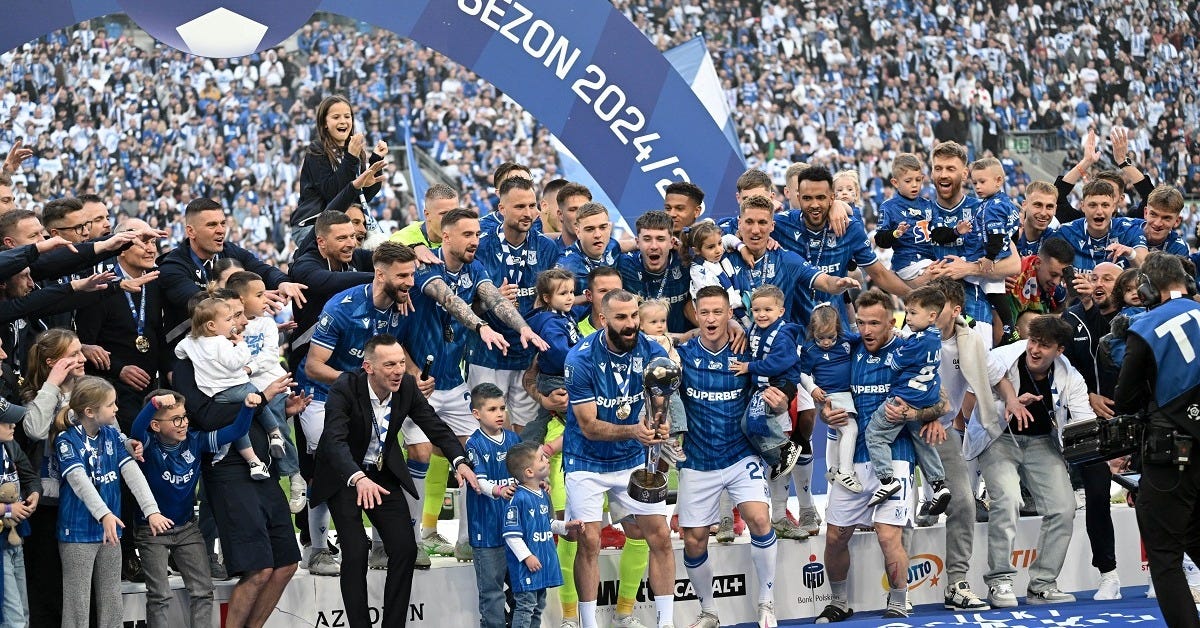
The best single snapshot of where Poland is comes from Grant Thornton’s latest Finansowa Ekstraklasa audit. In the 2024–25 edition, Legia Warszawa again led revenue with PLN 231m (including PLN 221m from core operations). The same report states Ekstraklasa clubs generated a record PLN 220m from player sales, another all-time high.
That is progress. But the ceiling is clear when you look at record transfer fees. Transfermarkt’s transfer record list for the league places Jakub Moder’s move from Lech Poznań to Brighton at €11m, which also appears in Moder’s transfer history page. The same record list groups Ante Crnac’s move from Raków Częstochowa to Norwich City in the same top bracket, with multiple reports describing an €11m package.
Here’s the Boardroom Ball point: a league with Poland’s TV deal and crowds should be regularly pushing beyond that price point for its best assets, or at least doing so more consistently. Poland is producing sales volume and occasional record deals, but not yet the pricing power you associate with a top-10 verification league.
P.S. If you want to further support our work here at Boardroom Ball — and pick up a classic retro kit while you’re at it — head over to our affiliate partner, Classic Football Shirts.

Ownership and governance are still too inconsistent to compound gains
A top-10 league is not built on one well-run club. It is built on boring standards: predictable governance, stable decision-making, and aligned incentives across 18 clubs.
Poland’s modern history still shapes perception. The mid-2000s corruption era is not just folklore. Reuters reported in 2007 on a match-fixing investigation stretching back nearly two years that escalated into major institutional turmoil. Academic and integrity literature also frames 2005 as a landmark scandal, with one study noting investigations that led to hundreds of indictments and convictions over subsequent years. Even if today’s Ekstraklasa is far more professional, reputational drag matters: it raises the “risk premium” on owners and sponsors who want certainty.
Ownership structure is the second issue. A 2025 paper in Wiadomości Statystyczne (The Polish Statistician) describes Polish professional clubs as being run by either privately-owned or state-owned enterprises, including those controlled by state-owned companies or local governments, and evaluates how ownership form affects sporting and financial efficiency.That mix is not automatically bad, but it tends to produce uneven incentives. Some clubs invest patiently in academies and recruitment. Others operate like political or municipal projects, with different priorities and different tolerances for short-termism.
In practice, that variance is what prevents compounding. One or two best-in-class operators can lift the league’s profile. A dozen inconsistent ones prevent the league from locking in a higher tier.
Europe is the bottleneck that decides whether you are top 10 or top 20
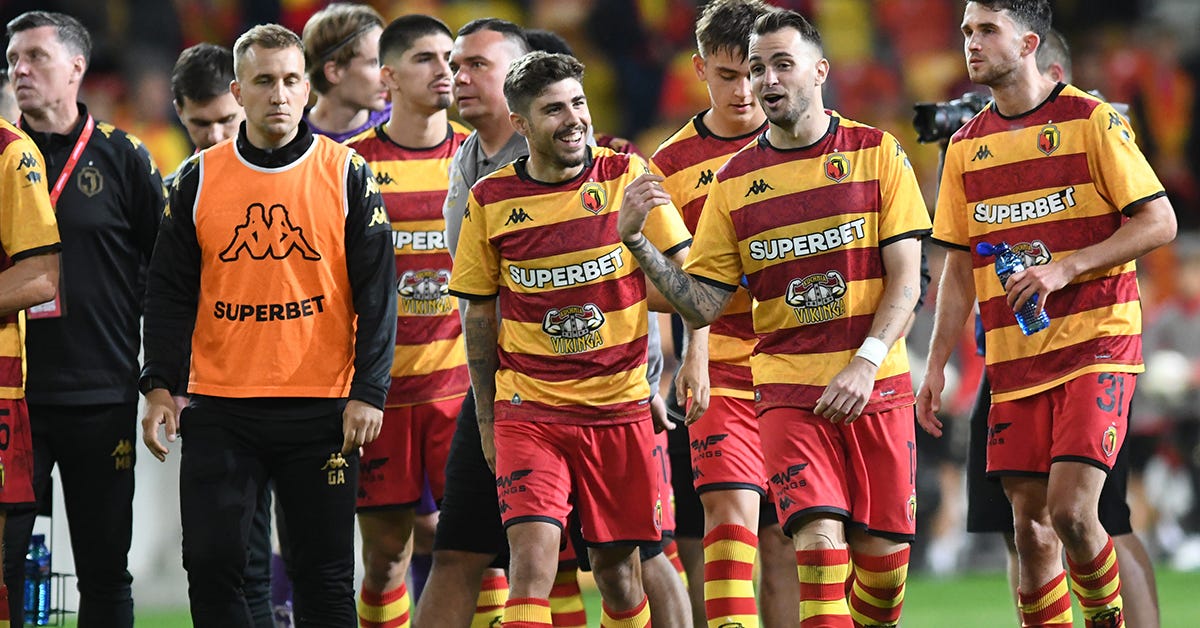
Domestic growth is useful, but the top-10 conversation is ultimately a European one. UEFA coefficients reward depth and repetition: multiple clubs collecting points every season, not one flag-bearer every few years.
In the 2024–25 season coefficient table, Poland sits 11th on the season’s returns, behind the leagues that typically gatekeep the top-10.That is respectable progress, and it matters because it signals that Polish clubs can compete. But it also underlines the gap: the Ekstraklasa is close enough to see the door, not yet strong enough to treat European group stages as a baseline business plan.
This is where the transfer market loops back. Belgium and the Netherlands price players higher because buyers are paying for a proven European environment. Poland is improving its European output, but until that becomes routine across multiple clubs, the Ekstraklasa will keep selling top talent at “emerging league” prices, even when the talent is real.
What would actually get Poland into the top 10 conversation
The Ekstraklasa does not need a miracle. It needs conversion. It already has broadcast scale, rising crowds, modern stadia, and record transfer income. The missing piece is a league-wide operating standard that reduces variance.
Three levers matter most.
First, governance has to stay boring. Poland’s past integrity story will fade fastest when enforcement, licensing and club standards are visibly consistent, season after season.
Second, the league must turn TV money into repeatable process: better coaching pipelines, better recruitment departments, and fewer strategic resets every time a board changes. The Canal+ cycle gives clubs a predictable runway, but predictability only helps if clubs use it to professionalise.
Third, Poland must break the export-pricing ceiling. When your record outgoing sits around €11m, you are still priced like a league that proves potential rather than one that proves readiness.European repetition is what unlocks that premium.
Poland should be a top-10 league because the fundamentals are there. It is not one yet because fundamentals do not compound on their own. Institutions do.
📲 Stay Connected with Us!
✅ Check out our YouTube Channel and follow us on Social Media for more content from the world of football business. ⚽️📈
YouTube: [@boardroomball]
LinkedIn: [Boardroom Ball]
Instagram: [@boardroomball]
TikTok: [@boardroomball]
💡 Subscribe to our FREE newsletter to get all the latest football business news straight to your inbox! Your support helps us continue delivering high-quality content.
Thank you for being part of our community—see you in the next edition of Inside the Boardroom!